frequency-hopping spread spectrum (FHSS)
What is frequency-hopping spread spectrum (FHSS)?
Frequency-hopping spread spectrum (FHSS) transmission is the repeated switching of the carrier frequency during radio transmission to reduce interference and avoid interception.
FHSS is useful to counter eavesdropping, as well as to obstruct the frequency jamming of telecommunications and to enable code-division multiple access communications. It can also minimize the effects of unintentional interference.
The idea behind FHSS was discovered and rediscovered several times in the 20th century. German physicist and electrical engineer Jonathan Zenneck initially mentioned the concept in print in 1908.
Credit for FHSS belongs to actress Hedy Lamarr, however, who worked with composer George Antheil to bring the technology into existence during World War II.
Another more practical application of frequency hopping was created by Ray Zinn, co-founder of Micrel Inc. It enabled radio communication systems to function without synchronizing the receiver with a transmitter in low data rate wireless applications.
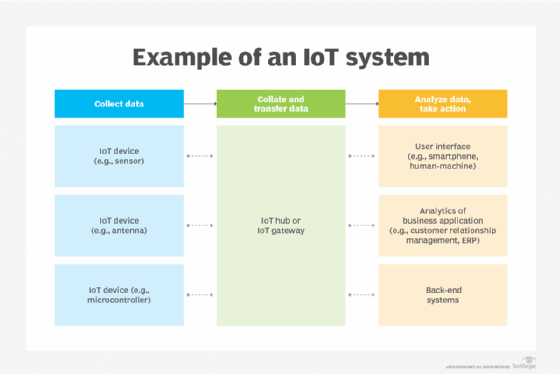
Examples include equipment monitoring and utility metering in environments such as the internet of things.
How does frequency-hopping spread spectrum work?
In FHSS, the transmitter hops between available narrowband frequencies within a specified broad channel in a pseudo-random sequence known to both sender and receiver.
A short burst of data is transmitted on the current narrowband channel, and then the transmitter and receiver tune to the next frequency in the sequence for the next burst of data. In most systems, the transmitter will hop to a new frequency more than twice per second.
Because no channel is used for long and the odds of any other transmitter being on the same channel at the same time are low, FHSS is often used as a method to allow multiple transmitter and receiver pairs to operate in the same space on the same broad channel at the same time.
What are the benefits of using FHSS?
Because a frequency band can be divided into subbands, user devices can rapidly change their carrier frequencies, or frequency hop, with minimal interference.
This wideband or broadband strategy provides a few benefits over fixed analog transmissions:
- As stated previously, it is resistant to narrowband interference.
- Data signals are difficult to intercept if the frequency-hopping pattern is not known.
- Jamming is difficult if the frequency channel or hopping algorithm is unknown.
- An FHSS transmitted radio signal can share frequency bands with conventional transmissions without significant interference.
For those reasons, military radios commonly use spread-spectrum signals for spreading coded language because they need to be stealthy and resilient against jamming techniques. To disrupt an FHSS signal, an opponent's equipment would need to have insight into the frequency-hopping pattern.
How is frequency-hopping spread spectrum regulated?
Governments regulate the broadcast spectrum and often dictate some aspects of spread-spectrum communications.
For example, in North America, the industrial, scientific and medical waveband is divided into 75 hopping channels, and the devices using them may not transmit with more than 1 watt of power on any one channel.
These restrictions ensure a single device does not consume too much bandwidth or linger too long on a single frequency.
In the 2000s, the U.S. Federal Communications Commission (FCC) allowed FHSS systems to operate in the unregulated 2.4 gigahertz band in order to support the use of FHSS in 802.11b, 802.11g and 802.11n Wi-Fi deployments.
FCC Code of Federal Regulations 47 part 15.247 provides guidance for frequency hopping for several megahertz frequency bands as well.
What are the variations of FHSS?
Additional spread spectrum techniques and variations of FHSS are commonly used today. A few examples follow.
Direct-sequence spread spectrum (DSSS)
DSSS is a related technique to FHSS. It also spreads a transmitted signal across a wide channel, but it does so all at once instead of in discrete bursts separated by hops.
It can achieve higher throughput, but DSSS systems are more susceptible to interference and less effective as a spectrum-sharing method.
Adaptive frequency-hopping spread spectrum (AFH)
AFH is used in Bluetooth wireless technology to improve resistance to radio frequency interference by circumventing high-traffic frequencies in the hopping sequence. This type of adaptive transmission is simpler to implement with FHSS than with DSSS.
Chirp modulation
Chirp modulation is another form of frequency hopping that simply scans all available frequencies in consecutive order.